🌿 Mistletoe
Weißbeerige Mistel
Viscum album L.
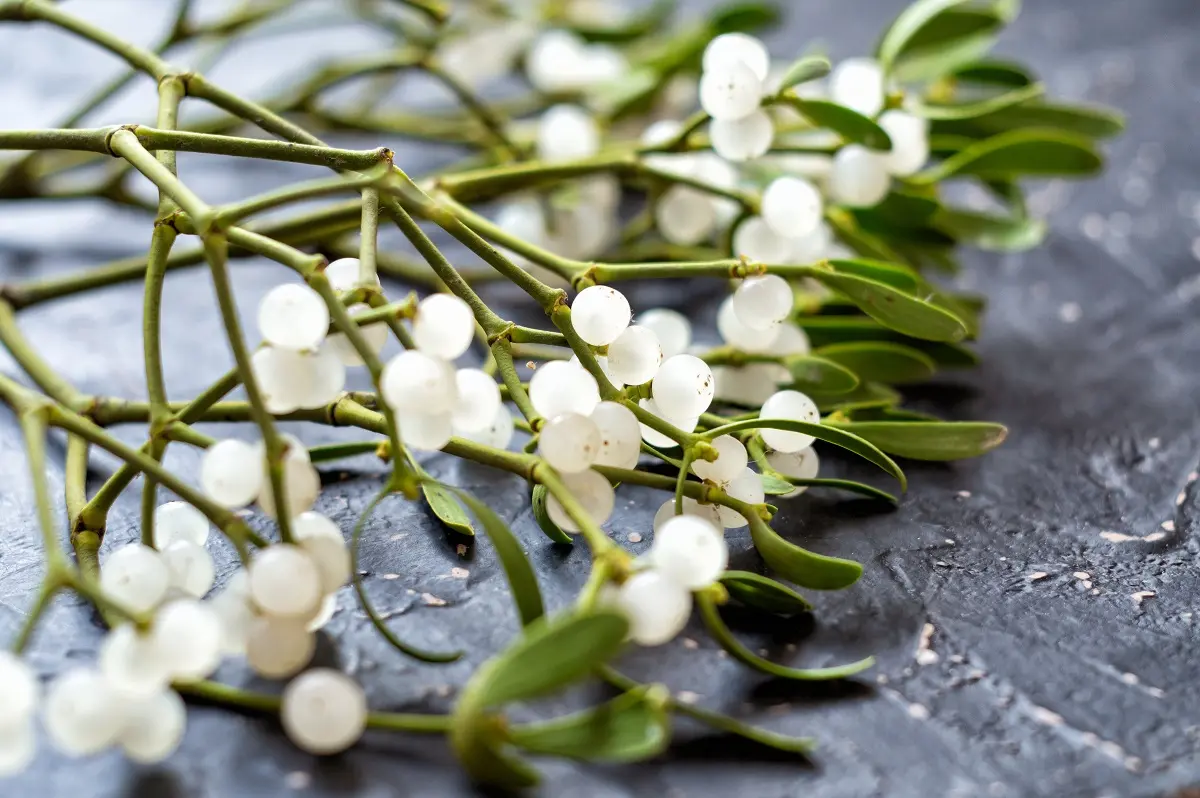
Mistletoe is an evergreen, semi-parasitic plant that grows on various trees. Medicinally, the herb (Visci albi herba) is used, consisting of the aerial parts including leaves and young branches. Its chemical composition can vary depending on the host tree and harvesting period. Important constituents include mistletoe lectins, viscotoxins, polysaccharides, flavonoids, phenylpropanes, lignans and various phenolic compounds.
Traditionally, mistletoe has mainly been associated with cardiovascular complaints and complementary cancer care. Mistletoe preparations are particularly well known in anthroposophic medicine. Research has investigated immunomodulatory, cytotoxic and anti-inflammatory effects.
Traditionally, mistletoe has mainly been associated with cardiovascular complaints and complementary cancer care. Mistletoe preparations are particularly well known in anthroposophic medicine. Research has investigated immunomodulatory, cytotoxic and anti-inflammatory effects.
Notes
Mistletoe is unusual among medicinal plants because its traditional use covers two very different areas: cardiovascular complaints and complementary oncology.
Effects
- cytotoxic
- antiproliferative
- studied for cancer prevention
- immunomodulatory
- anti-inflammatory
- supportive of healthy blood pressure
- calming
- antioxidant
Conditions
- cancer prevention
- impaired immune function
- cardiovascular system
- inflammatory processes
- high blood pressure
Application Areas
- cells
- cancer prevention
- immune system
- cardiovascular system
- blood vessels
Plant Parts
- aerial parts
- herb
- young stems
- fruit
- leaf
Preparations
- tincture
- tea
- dried
- infusion
Contraindications
- breastfeeding
- pregnancy
- allergy